Stunning Photos of the Amazing World of Jellyfishes
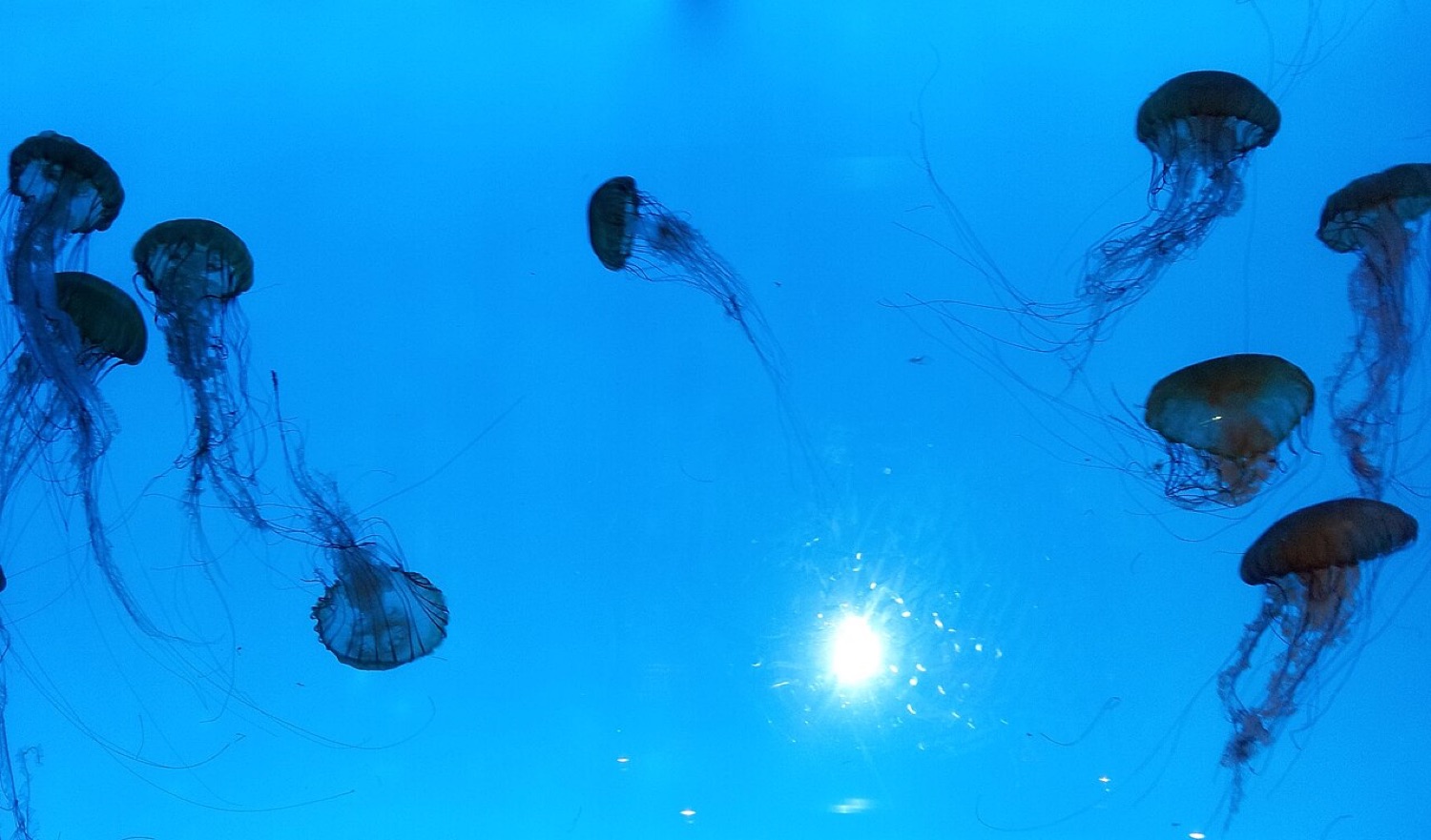
They have no brain, no heart, no bones and no blood, and their bodies are about 95% water. Yet jellyfish have drifted through the oceans for more than 500 million years, long before the first dinosaurs, and they are among the most hypnotic creatures you can watch.
How a jellyfish works
A jellyfish is basically a bell of jelly with a mouth underneath and tentacles hanging down. Instead of a brain it has a nerve net spread through its body, with simple sense organs around the rim of the bell that detect light, gravity and touch. It swims by contracting the bell to push water out, then relaxing, a surprisingly energy-efficient way to travel. Its tentacles are armed with thousands of stinging cells called cnidocytes, each with a tiny harpoon that fires on contact.
Six jellyfish worth knowing
- Nomura's jellyfish. A giant of the seas between China, Korea and Japan, its bell can reach around two metres across and it can weigh as much as a large adult lion. Blooms of them have clogged fishing nets and even capsized a trawler.
- Lion's mane jellyfish. Found in cold northern waters, it is one of the longest animals known, with tentacles reported at well over 30 metres.
- The "immortal" jellyfish. Turritopsis dohrnii, smaller than a fingernail, can turn its adult body back into an early polyp stage when stressed or injured, starting its life cycle again. In theory it can repeat the trick indefinitely.
- Box jellyfish. The Australian Chironex fleckeri has one of the most potent venoms in the animal kingdom. Box jellyfish also have surprisingly complex eyes, 24 of them.
- Upside-down jellyfish. Cassiopea rests on the seabed bell-down with its tentacles in the sun, where algae living in its tissues photosynthesise and share the sugar.
- Crystal jelly. Aequorea victoria glows green thanks to a protein that changed biology. The discovery and development of green fluorescent protein, now used to light up cells in labs worldwide, won the 2008 Nobel Prize in Chemistry.
Lakes, blooms and lights
In Palau, a marine lake cut off from the sea holds millions of golden jellyfish that follow the sun across the water each day; their stings are so mild that snorkellers swim among them. Elsewhere, warmer seas and overfishing have been linked to huge jellyfish blooms that block power-station intakes and ruin fishing seasons. Many deep-sea species make their own light, flashing blue or green to startle predators in the dark.
How to photograph jellyfish
You do not need to dive. Public aquariums with jellyfish halls are the easiest place: turn off the flash, press the lens close to the glass to cut reflections, use a fast shutter, and wait for a jellyfish to drift against a dark background. Backlit tanks make the bells glow like lanterns.
Monte Carlo's other great attraction
One of the best places in the world to watch jellyfish is just across the harbour from the most famous casino on Earth. The Oceanographic Museum of Monaco sits on the cliff edge of the Rock, the old town of Monaco. It was founded by Prince Albert I, a passionate ocean scientist, and opened in 1910. From 1957 to 1988 its director was Jacques-Yves Cousteau, and its aquariums, jellyfish included, still draw crowds.
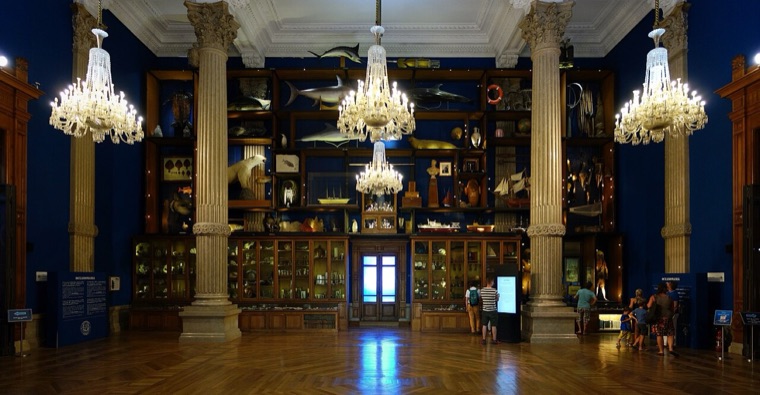
The connection runs deeper than geography. Monaco's prosperity since the late 19th century has been closely tied to the Casino de Monte-Carlo, opened in the 1860s, and the principality's wealth helped fund Prince Albert's research voyages and his museum. So a day in Monaco can be pure science in the morning and roulette under the chandeliers at night. Discover the casino in 12 of the Most Amazing Casinos in the World, and plan the trip with 7 Casino Cities to See Before You Die.