10 of the Luckiest Lottery Winners and Strangest Jackpots
The lottery is the purest game of chance there is. No skill, no strategy, just numbers. Which makes the stories of people who beat the odds, sometimes more than once, all the more astonishing. Here are ten of the luckiest winners and strangest jackpots on record, followed by the odds that explain why they are so rare.
1The woman who won four times
Joan Ginther, a former maths teacher from Texas, won four large Texas Lottery prizes between 1993 and 2010, three of them from scratch cards, totalling more than $20 million. Statisticians have argued ever since about whether it was extraordinary luck, clever ticket buying, or both. She never explained.
2Twice in four months
Evelyn Adams won the New Jersey lottery in 1985 and again in 1986, collecting about $5.4 million in total. Sadly, she later said she had lost most of it, much of it at the slot machines of Atlantic City, a cautionary tale that often follows her name.
3The fortune cookie draw
In March 2005, Powerball officials were stunned when 110 players matched five of the six numbers in a single draw, far more than expected. They suspected fraud until the winners started explaining: they had all taken their numbers from fortune cookies printed by the same New York company. Each won a second prize of $100,000 to $500,000.
4The village that won El Gordo
Spain's Christmas lottery, El Gordo, has the biggest total prize pool of any lottery in the world, and tickets are often shared among whole villages, offices and clubs. In 2011 nearly every household in the tiny Aragonese village of Sodeto had a share of the winning number, splitting roughly €120 million. One resident, a filmmaker who had moved there recently, was famously the only person who had not been asked to buy in.
5The two-billion-dollar ticket
In November 2022 a single Powerball ticket sold in Altadena, California, won a jackpot of $2.04 billion, the largest lottery prize in history. The winner chose the cash option, roughly $1 billion before tax.
6The man who bought every combination
Stefan Mandel, a Romanian-born economist, worked out that when a jackpot grew big enough, buying every possible combination guaranteed a profit. He did it with syndicates of investors, reportedly winning lotteries 14 times. His most famous play, in Virginia in 1992, won a $27 million jackpot, and lottery rules around the world were changed to stop it happening again.
7The couple who cracked a game
Jerry and Marge Selbee, retirees from Michigan, noticed that certain state games paid out extra prizes when the jackpot "rolled down" unclaimed. By buying huge numbers of tickets on those draws, they reportedly made millions over several years, entirely legally.
8Back from the dead, then lucky twice
In 1999 Bill Morgan, an Australian, survived a medical emergency in which his heart stopped for several minutes. Soon afterwards he won a car on a scratch card. When a television crew asked him to re-enact the moment, he scratched a new card on camera and won A$250,000.
9The same numbers twice in a row
In September 2009 the Bulgarian lottery drew 4, 15, 23, 24, 35 and 42 in two consecutive draws. An investigation found no manipulation; it was simply chance. As mathematicians pointed out, any particular sequence is just as likely as any other. It merely looks impossible.
10The winner who gave it all away
When Tom Crist, a retired businessman from Calgary, won a C$40 million Lotto Max jackpot in 2013, he announced he would give the whole lot to charity in memory of his late wife.
The odds, honestly
Here are the jackpot odds for some of the world's best-known games. Remember that every combination, including 1, 2, 3, 4, 5, 6, has exactly the same chance.
| Lottery | Jackpot odds (one line) |
|---|---|
| UK National Lottery Lotto | 1 in 45,057,474 |
| EuroMillions | 1 in 139,838,160 |
| US Powerball | 1 in 292,201,338 |
| US Mega Millions (since 2025) | about 1 in 290 million |
| Spain's El Gordo, first prize | 1 in 100,000 per number |
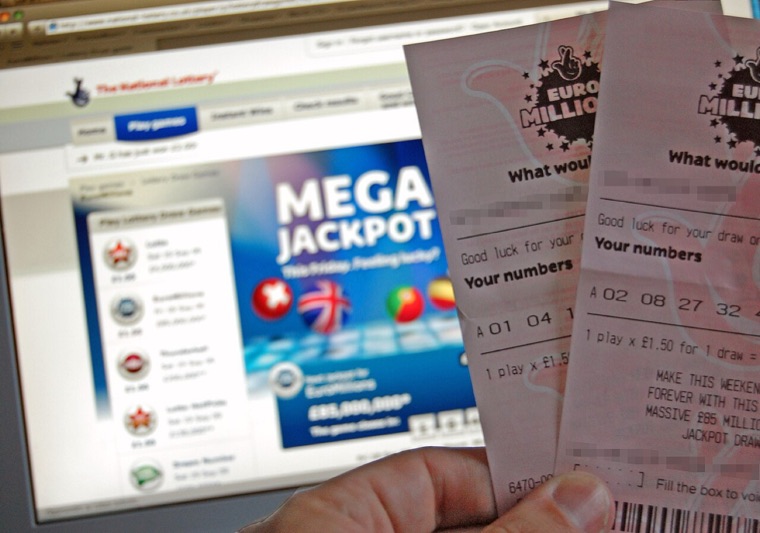
El Gordo looks generous because there are only 100,000 numbers, but each number is printed many times over and split into shares, so a first prize is shared among many ticket holders. Big jackpot games are the opposite: tiny odds, huge prizes. One practical tip does follow from the maths: numbers above 31 are chosen less often because so many people play birthdays, so if you do win with them, you are less likely to share the prize. It does not change your odds of winning, only of sharing.
For more on why "lucky numbers" and "due" numbers are myths, read The Science of Luck: 7 Probability Myths Busted. And for gamblers whose luck came from a bookmaker rather than a draw, see 9 Bizarre Bets That Actually Paid Off.