Do You Love Cats? Aoshima Island Should Be Your Next Destination
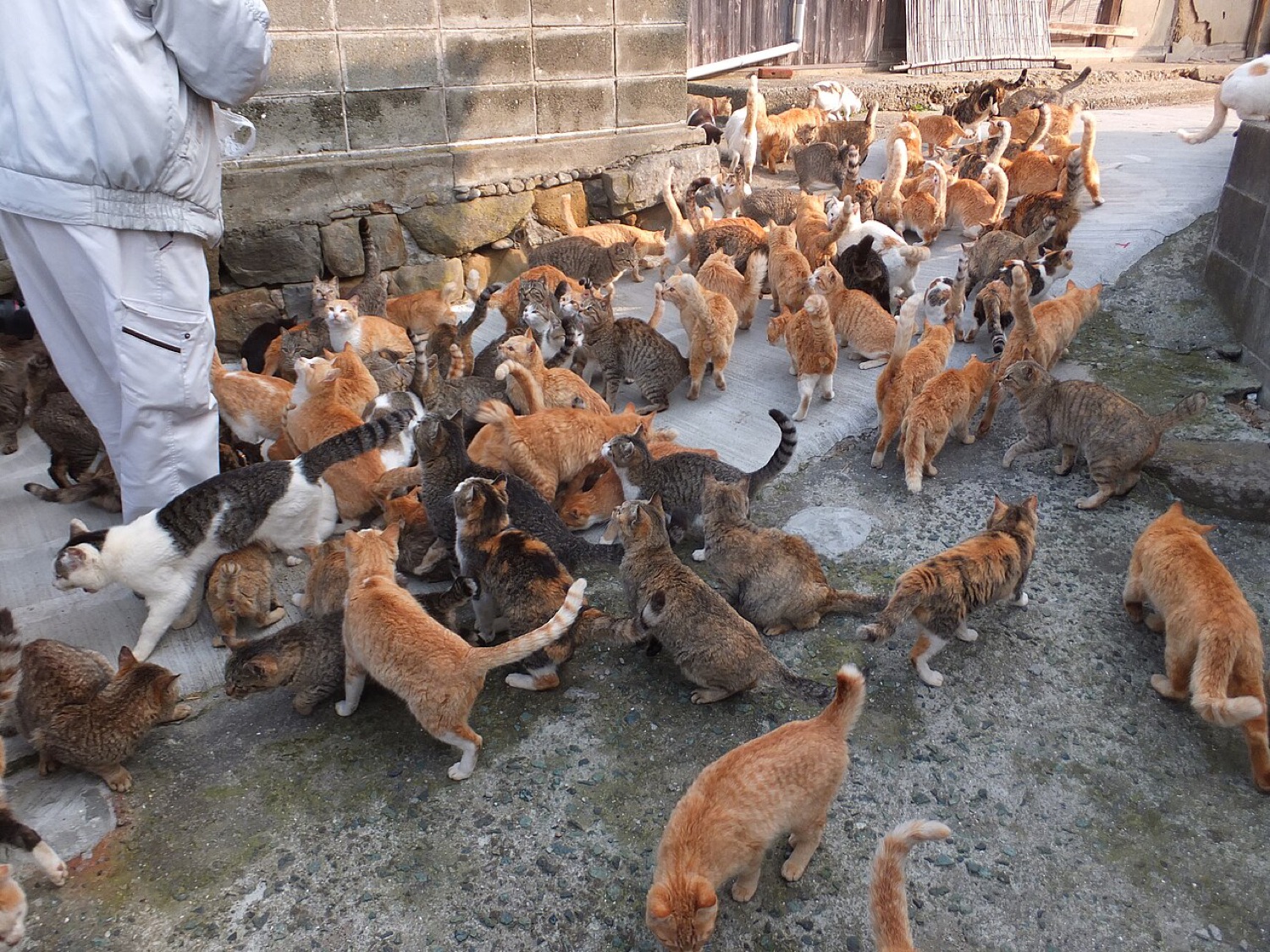
On a tiny island in southern Japan, cats rule. They sleep in abandoned houses, sun themselves on the harbour wall and swarm every ferry that arrives, hoping someone has brought snacks. Welcome to Aoshima, one of the world's most famous cat islands.
An island of cats and fishermen
Aoshima is a sliver of land about 1.6 kilometres long off the coast of Ehime Prefecture, on the island of Shikoku. Cats were brought here to deal with mice that plagued the fishermen's boats and nets. Then the people began to leave. After the Second World War the island had several hundred residents; as young people moved to the cities, the population dwindled to a handful of elderly villagers.
The cats stayed and multiplied. When the island became famous online around 2015, cats outnumbered people by more than ten to one. Since then, a neutering programme has kept numbers from growing, so the colony is slowly getting smaller and older, a little like the village itself.
How to visit
Aoshima at a glance
- Where
- Ehime Prefecture, Shikoku, in the Seto Inland Sea
- Getting there
- Small ferry from Nagahama port, around 35 minutes, usually twice a day
- Facilities
- No shops, cafés, vending machines or hotels
- Bring
- Water, your own lunch, and cat food only where feeding is allowed
- Take home
- All your rubbish
The ferry is small and fills quickly at weekends, so arrive early. Remember that this is a village, not a theme park: be quiet, keep out of private buildings and follow the residents' rules about where cats may be fed. The cats are semi-wild and some are shy; let them come to you.
Japan's other cat islands
Aoshima is not alone. Tashirojima in Miyagi Prefecture has a small shrine dedicated to cats, which fishermen believed brought good luck and good catches. There are a dozen or so islands across Japan where cats are a big part of island life.
The lucky cat and Japan's long road to the casino
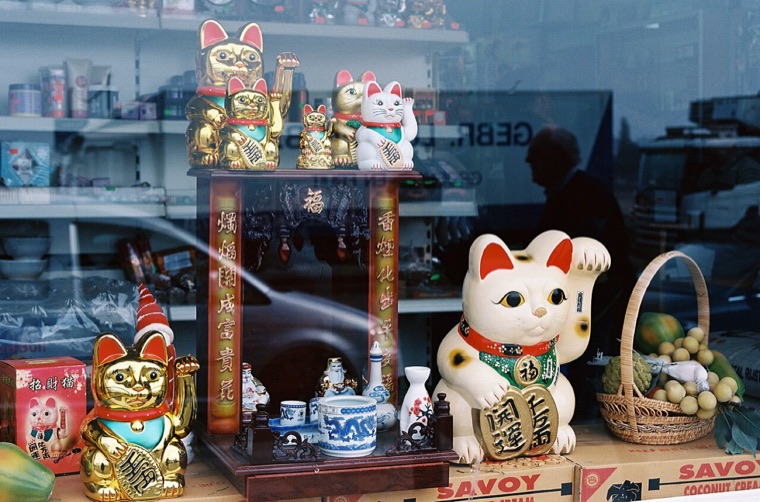
Cats and fortune have been linked in Japan for centuries. The best-known symbol is the maneki-neko, the beckoning cat, a ceramic or plastic cat with one paw raised. A raised left paw is said to invite customers, a raised right paw to invite money. You will see it in shop windows, restaurants and, very often, at the entrance of pachinko parlours, Japan's famously noisy halls of vertical pinball machines.
Pachinko occupies a curious legal space. Players win steel balls that are exchanged for prizes, and the prizes can be swapped for cash at a separate counter nearby, a long-standing arrangement that keeps the halls on the right side of laws against gambling for money. Full casinos were banned until Japan passed laws in 2016 and 2018 allowing a small number of "integrated resorts" combining hotels, conference halls and a casino. The first, in Osaka Bay, was approved in 2023 and is expected to open around 2030.
Does a lucky cat actually change your odds? We look at charms, rituals and what the research says in The Science of Luck: 7 Probability Myths Busted. And for the casinos Japan's planners studied, from Macau to Singapore, see 12 of the Most Amazing Casinos in the World.